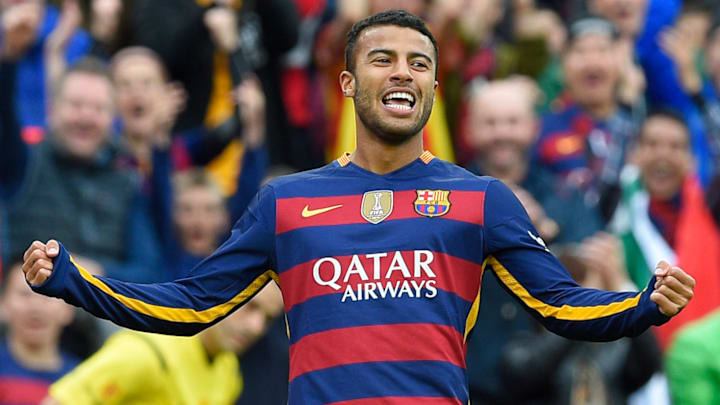
Rafinha Alcântara Injury Update: How Persistent Physical Problems Brought a Promising Career to an Early End
Rafinha Alcântara’s injury story is one of unrealised continuity rather than a lack of talent. Once regarded as one of the most technically gifted midfielders of his generation, Rafinha’s career trajectory was repeatedly disrupted by physical setbacks that ultimately led to his decision to step away from professional football earlier than many expected.
From a young age, Rafinha stood out for his intelligence on the ball, close control, and ability to operate between midfield and attack. His technical profile made him a natural fit for possession-based systems, and expectations were high as he progressed through elite football environments. However, recurring injuries gradually shifted the narrative from potential to perseverance.
You might also like

Value prediction Explained: How to Find Profitable prediction Opportunities
05:45 agoThe most damaging aspect of Rafinha’s injury history was not a single catastrophic incident, but a pattern of knee and muscular problems that repeatedly interrupted his rhythm. Knee injuries in particular are unforgiving for midfielders, who rely on constant movement, balance, and changes of direction. Each setback forced extended periods of rehabilitation, followed by cautious reintegration that often coincided with new physical issues.
For players like Rafinha, continuity is everything. Midfield roles demand timing, awareness, and consistent match exposure to maintain sharpness. Long spells away from competition disrupt not only physical conditioning but also tactical cohesion and confidence. Each return required Rafinha to re-establish himself in environments where competition for places was intense.
The psychological toll of repeated injuries is often underestimated. Unlike a single long-term injury with a clear recovery arc, recurring problems create uncertainty. Players train, return to match action, feel close to peak condition, and then experience setbacks that reset the process. Over time, this cycle can erode confidence in the body’s reliability.
Related Article
Al Hilal vs Ittihad Jeddah: Prediction, Preview, Lineups, Insights
03:41 agoRafinha’s situation illustrates how modern football’s physical demands amplify vulnerability. High-tempo pressing systems, congested calendars, and limited recovery windows place enormous stress on joints and soft tissue. Even technically gifted players who rely less on raw speed are not immune, particularly when injuries compromise stability and balance.
At club level, repeated absences inevitably affect trust and planning. Coaches value availability as much as ability, especially in systems that demand constant rotation and adaptability. While Rafinha’s quality was evident whenever he played, uncertainty around fitness made long-term reliance difficult.
As injuries accumulated, the challenge shifted from recovery to sustainability. Rehabilitation is not only about returning to play, but about maintaining fitness over months rather than weeks. For Rafinha, each season brought renewed hope followed by physical limitations that prevented extended runs of matches.
Eventually, the decision to retire became less about ambition and more about reality. When the body no longer responds predictably to training and competition, continuing at elite level becomes increasingly difficult. Retirement in such cases is not a surrender, but an acknowledgement of physical limits after years of effort to overcome them.
Rafinha’s story serves as a reminder that football careers are shaped by far more than talent. Durability, recovery capacity, and injury resilience play decisive roles in determining how fully a player’s potential is realised. Many gifted players never reach their projected heights simply because their bodies cannot sustain elite demands.
For fans, Rafinha’s injury update offers perspective. Success in football is often measured by trophies and appearances, but behind those numbers lie countless rehabilitation sessions, setbacks, and difficult decisions. Not every career ends on the pitch, and not every legacy is defined by longevity.
Ultimately, Rafinha Alcântara’s journey reflects the fragile balance between skill and physical sustainability. His technical quality was never in question, but his body repeatedly denied him the continuity required to fully express it. In stepping away, he closes one chapter while leaving behind a story that resonates with many players whose battles are fought as much in recovery rooms as on the field.
In elite sport, talent opens doors — but health decides how long they stay open.


No comments yet. Be the first to share your thoughts!