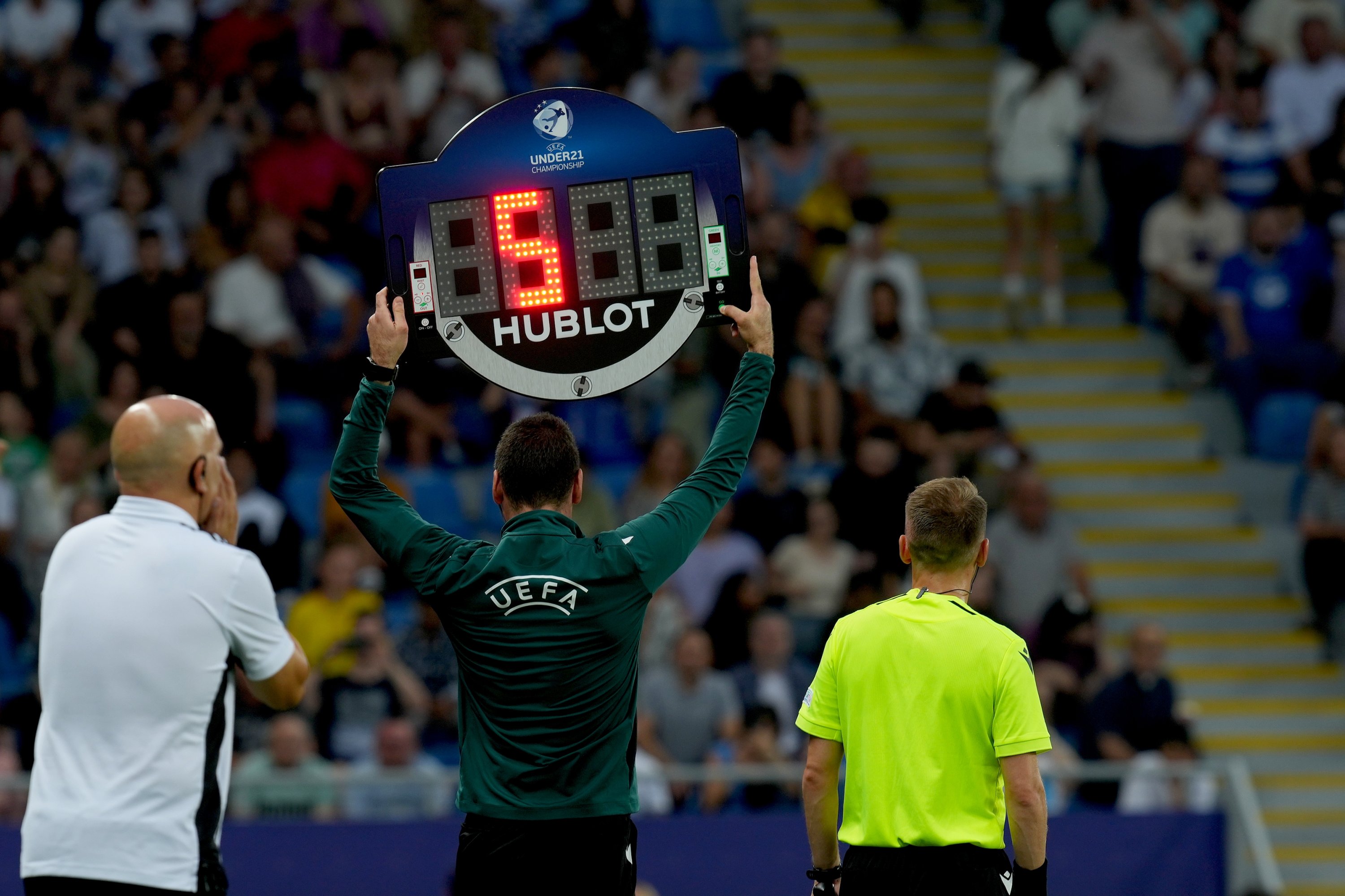
One of the most confusing moments in football is when added time is announced—say +6 minutes—and the referee still lets play continue beyond it. Fans often ask why the match didn’t end exactly when the clock hit the added time mark.
Referees add extra time to extra time because added time itself can include stoppages. Football does not use a stopped clock, so any time lost during stoppage time must also be recovered.You might also like
Brann vs Bologna: Prediction, Preview, lineups
14:09 agoIt compensates for:
Related Article

Best World Cup Teams That Didn’t Win: Football’s Greatest Near Misses
15:01 ago- Goals and celebrations
- Substitutions
- Injuries and treatment
- VAR checks
- Delays and time-wasting
If more delays happen after that board goes up, more time can be added.
Stoppages Still Happen During Added TimeAdded time is still part of the match, so normal interruptions apply.
During stoppage time, you often see:
- Late substitutions
- Injuries or cramp
- Goal celebrations
- VAR reviews
Each of these pauses stops active play and must be compensated for.
Goals in Added Time Extend the MatchLate goals are a major reason matches run beyond the displayed minutes.
When a goal is scored:
- Celebrations take time
- VAR confirmation may occur
- Players regroup for kickoff
If a goal is scored in added time, referees almost always extend the match further.
Time-Wasting Is Still Punished in Added TimeTeams often increase time-wasting once added time begins.
This includes:
- Slow restarts
- Goalkeepers holding the ball
- Delays over free kicks and throw-ins
Referees respond by allowing play to continue beyond the minimum added time.
VAR Reviews Add Significant TimeVAR interventions during stoppage time are common and costly in seconds.
They may involve:
- Penalty checks
- Offside reviews
- Red card incidents
A single VAR review can add one or two minutes on its own.
The Referee Controls the Final WhistleThere is no automatic cutoff at the end of added time.
The referee decides when:
- The minimum time has been played
- Any additional delays have been compensated
- The phase of play is complete
This is why matches sometimes end during an attack or immediately after a clearance.
Why Referees Often Let Attacks FinishReferees commonly allow an attacking move to conclude.
They do this to:
- Avoid controversy
- Maintain fairness
- Prevent accusations of stopping a clear chance
This discretion can add seconds or even a minute beyond the stated time.
Why Extra Time Feels InconsistentFans feel inconsistency because:
- Every match has different stoppages
- Game flow varies
- Late incidents change expectations
Added time is dynamic, not fixed.
Why Matches Sometimes End EarlyOccasionally, matches end right on the added time mark.
This happens when:
- No stoppages occur during added time
- The ball is in a neutral area
- The referee judges time has been fully recovered
There is no requirement to exceed the displayed minutes.
Psychology Makes Extra Time Feel LongerAdded time feels longer because:
- Emotions are high
- Results are on the line
- Every second feels decisive
A single extra minute can feel endless in tense moments.
Why This Happens More in Modern FootballModern football has:
- More VAR usage
- More substitutions
- Stricter time-wasting enforcement
All of these increase the likelihood of extended stoppage time.
How This Helps You Read Live MatchesUnderstanding this helps fans:
- Stay patient during long endings
- Anticipate late drama
- Understand referee decisions
It explains why matches rarely end exactly on schedule.
Final ThoughtsReferees add extra time to extra time because football is played continuously. Any interruption—no matter when it happens—must be recovered to keep the contest fair.
The number shown is a minimum, not a deadline. In modern football, the match ends when the football has actually been played.

No comments yet. Be the first to share your thoughts!