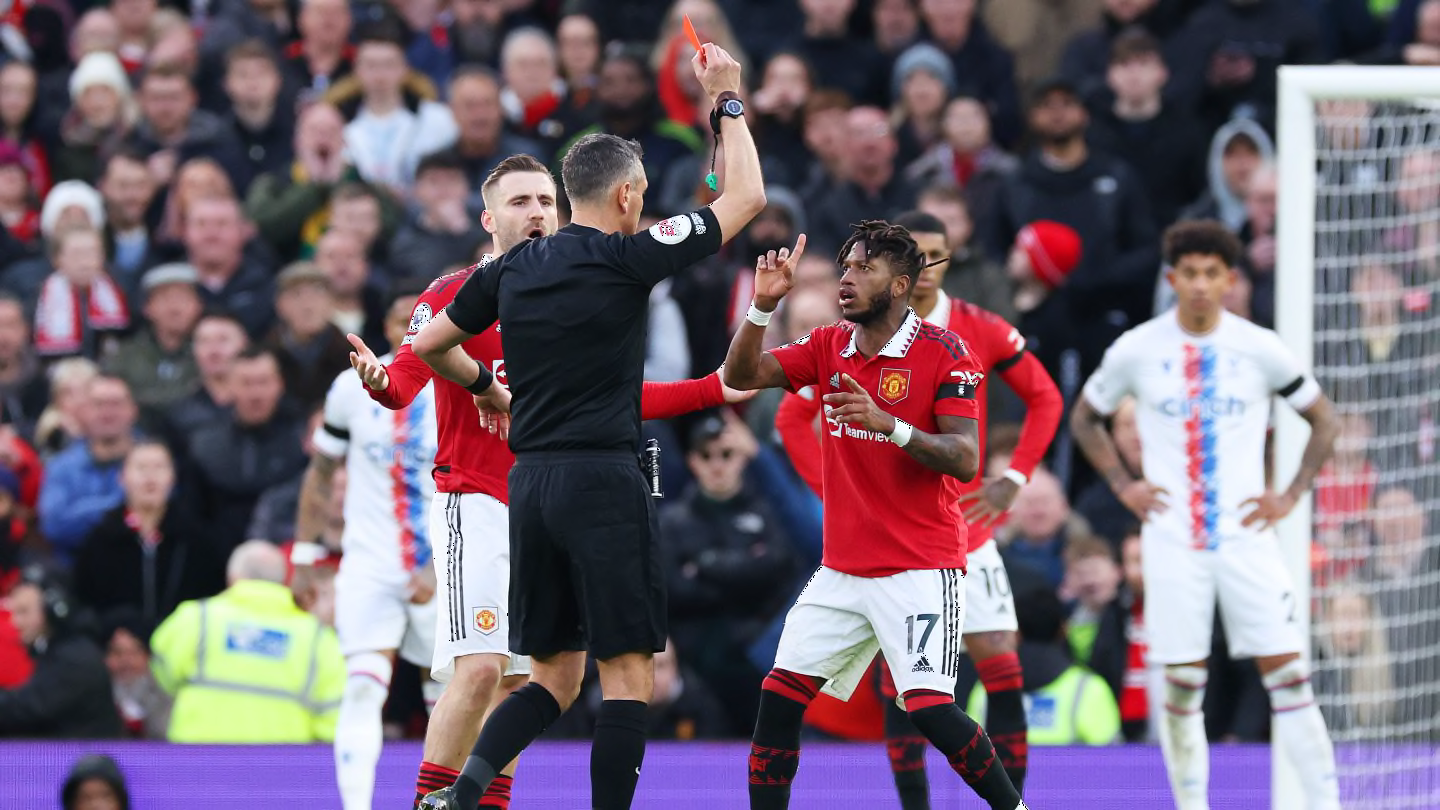
Few moments alter a football match as dramatically as a red card. A single decision can flip momentum, reshape tactics, and turn a predictable game into chaos. Whether deserved or controversial, red cards have an outsized impact on how matches are played and how results unfold.
Red cards do not just reduce numbers — they change psychology, structure, and decision-making across the entire pitch.
You might also like

Garber opens door to pro-rel in state of the league address
06:02 agoWhen a team receives a red card, they immediately lose:
- A player on the pitch
- Numerical balance
- Tactical flexibility
Related Article

Why Teams Start Matches Slowly in Football
19:40 agoPlaying with ten men forces instant adjustments, often without preparation or ideal substitutions.
Immediate Tactical ReorganisationAfter a red card, teams must reorganise within seconds.
Common responses include:
- Switching to a more defensive formation
- Dropping wingers into deeper roles
- Sacrificing attacking players
These changes disrupt rhythm and often reduce attacking threat.
Loss of Pressing and Defensive CoverageModern football relies heavily on pressing and compact shape.
With one player fewer:
- Pressing intensity drops
- Passing lanes open
- Defensive lines stretch
Even well-organised teams struggle to cover the same ground with reduced numbers.
Why the Team With 11 Players Often Struggles at FirstIronically, the team with the numerical advantage does not always dominate immediately.
This happens because:
- They become overconfident
- Tempo slows unnecessarily
- Decision-making becomes careless
The red-carded team often plays with urgency and clarity early, while the other side needs time to adjust.
Psychological Impact on the Red-Carded TeamRed cards trigger strong emotional responses.
Players may:
- Feel injustice or anger
- Become overly cautious
- Play with survival mentality
This emotional shift often leads to deeper defending and fewer risks.
Why Fatigue Becomes a Major FactorPlaying with ten men is physically demanding.
As the match progresses:
- Extra running increases fatigue
- Defensive concentration drops
- Recovery runs become slower
This is why many goals against ten-man teams come late in matches.
Space and Time Increase for the OpponentNumerical advantage creates space naturally.
The team with eleven players enjoys:
- More time on the ball
- Wider passing angles
- Fewer defensive challenges
If used patiently, this advantage eventually produces high-quality chances.
Why Set Pieces Become More DangerousRed cards heavily affect set-piece defending.
Teams with ten men:
- Have fewer markers
- Struggle with zonal coverage
- Lose aerial presence
Corners and free kicks become critical moments after a sending-off.
Game State Matters More After a Red CardThe timing of the red card is crucial.
- Early red cards usually lead to domination
- Late red cards may not change the result
- Red cards when leading create extreme pressure
Context determines whether a red card is decisive or survivable.
Why Some Teams Still Win With Ten MenDespite the disadvantage, teams sometimes win after a red card.
This happens when:
- They score before the red card
- They defend compactly and efficiently
- The opponent lacks patience
Discipline and structure can temporarily offset numerical disadvantage.
How Referees Adjust After a Red CardReferees often manage games differently after a sending-off.
They may:
- Allow less physical contact
- Control tempers more strictly
- Monitor retaliation closely
This changes the flow and intensity of the match.
Why Red Cards Create More Goals LateStatistically, goals increase after red cards, especially late.
Reasons include:
- Fatigue in the reduced side
- Sustained pressure from the opponent
- Breakdown of defensive shape
Late collapses are common when energy runs out.
Why Red Cards Feel So Unfair to FansFans react strongly because red cards:
- Feel like instant punishment
- Override earlier dominance
- Change outcomes suddenly
Emotionally, they feel more decisive than goals.
How This Helps You Read Live MatchesUnderstanding red-card impact helps fans:
- Predict momentum shifts
- Interpret tactical changes
- Anticipate late pressure
A red card rarely ends a match — it reshapes it.
Final ThoughtsRed cards completely change football matches because football is built on balance. Removing one player breaks that balance physically, tactically, and psychologically.
While quality still matters, numbers eventually matter more. Over time, space appears, fatigue grows, and pressure wins.
In football, a red card doesn’t just punish a player — it rewrites the match.





No comments yet. Be the first to share your thoughts!