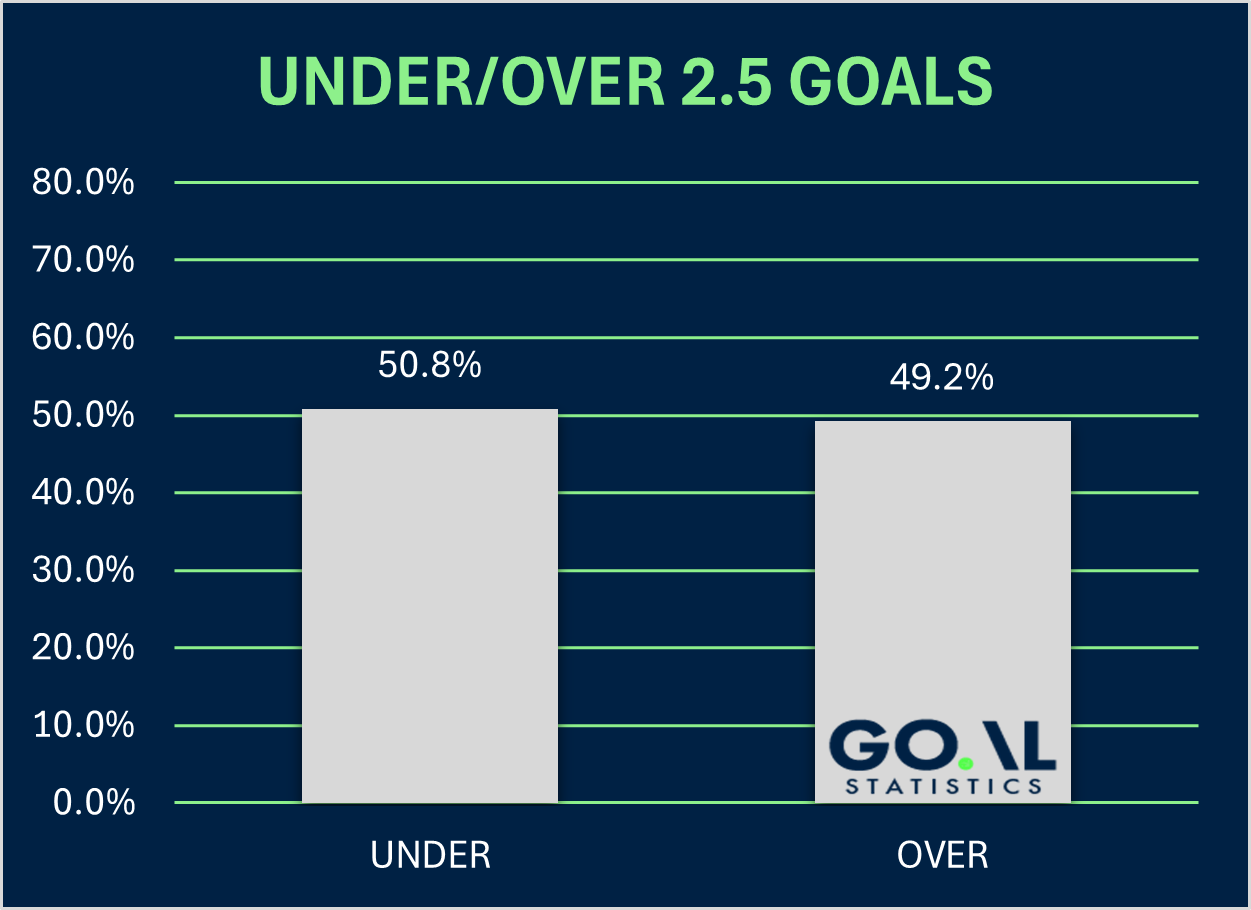
The Over/Under 2.5 Goals market is one of the most widely used prediction markets in football. It is simple, statistically driven, and ideal for bettors who prefer analysing goal patterns rather than predicting match winners. Because of its consistency and clarity, it has become a key part of many long-term prediction strategies.
You might also like

Why Underdogs Often Start Strong but Fade in Football Matches
19:39 agoThis guide breaks down what the market means, how to analyse it, when to use it, and the common mistakes to avoid — helping you turn the Over/Under market into a structured investment approach.What Does Over/Under 2.5 Goals Mean?
The market allows you to pick on whether a match will finish with:
Related Article

Xabi Alonso Sacked by Real Madrid After Shock Supercopa Defeat
14:14 agoOver 2.5 goals (3 or more total goals)
Under 2.5 goals (2 or fewer total goals)
Winning Example Outcomes:Over 2.5 wins if:
3–0, 2–1, 3–2, 4–0, 2–2
Under 2.5 wins if:
0–0, 1–0, 1–1, 2–0
You do not have to predict the winner.
You only need the total number of goals.
Why Over/Under 2.5 Is Popular Among Investors
✔ Consistent long-term patterns
Many leagues show stable goal averages across seasons.
✔ No need to choose a match winner
You remove team bias and unpredictable results.
✔ Effective for data-driven bettors
Goal totals are more predictable than outcomes.
✔ Available in every league and match
One of the most universal football markets.
When Over 2.5 Goals Is a Good pick
You should consider prediction Over 2.5 when analysis supports a high-scoring match. Key indicators include:
1. Both Teams Average High Scoring RatesLook for:
Each team scoring 1.4+ goals per match
Each team conceding regularly
Recent matches showing 3+ goals trends
Strong scoring + weak defending = ideal Over 2.5 conditions.
2. Attacking Style of PlayTeams with:
High pressing
Fast wingers
Fluid attacking patterns
Fullbacks who push up
…tend to create open, goal-rich matches.
3. Defensive Weaknesses or InjuriesMissing centre-backs, inexperienced goalkeepers, or poor defensive structure significantly increase goal potential.
4. Motivation for GoalsSituations such as:
Relegation battles
Title races
Must-win fixtures
Second legs in cups
…often push both teams to attack, not protect a draw.
When Under 2.5 Goals Makes Sense
prediction Under 2.5 can be just as profitable — especially in structured, defensive leagues.
1. Strong Defensive RecordsTeams consistently keeping clean sheets or limiting shots.
2. Slow, Tactical Matcheslikely teams prefer:
Deep blocks
Possession control
Minimal risks
Compact formations
These usually lead to lower-scoring games.
3. Missing Key AttackersIf a team is without:
Their main goal scorer
Creative midfielders
Pace options in attack
…it often reduces goal potential.
4. Derby Matches or High-Pressure FixturesContrary to expectation, many derbies become cautious tactical battles with limited scoring chances.
Important Factors for Over/Under Analysis
To turn this market into an investment strategy, evaluate all key variables:
1. Goals Scored & Conceded (Season Averages)This is your starting point.
Higher averages = more Over opportunities.
Many teams:
Score more at home
Concede more away
Produce different goal averages depending on venue
Always check location-specific data.
3. Recent Form (Last 5–10 Matches)Short-term trends often reveal temporary shifts in style or confidence.
4. Tactical MatchupsSome combinations naturally favour goals, such as:
High-pressing teams vs counter-attacking teams
High defensive line vs pacey forwards
5. Injuries, Suspensions, RotationsTeam news is crucial — missing attackers reduce Over potential, missing defenders increase it.
6. Weather ConditionsHeavy rain, high winds, or poor pitch conditions often reduce scoring.
Leagues Where Over 2.5 Goals Performs Best
likely leagues are known for higher scoring rates:???? Dutch Eredivisie — extremely open, high goal averages
???? German Bundesliga — fast transitions, lots of attacking football
???? Swiss Super League — frequent Over outcomes
???? Belgian Pro League — balanced scoring
???? MLS — unpredictable and often high scoring
High-tempo leagues = more Over 2.5 opportunities.
Leagues with lower scoring trends (better for Under 2.5):
French Ligue 1
Argentine Primera
English Championship
Japanese J-League
Common Mistakes to Avoid
Avoid these if you want consistent results:
❌ Assuming Strong Teams Always Produce Over 2.5
Big clubs often grind out low-scoring wins.
❌ Ignoring Pace of Play
Possession-based teams may dominate the ball but create few clear chances.
❌ prediction Too Early Before Team News
Late injuries or rotations drastically change goal potential.
❌ Overreacting to One High-Scoring Match
Patterns matter more than one-off results.
Example Over/Under 2.5 prediction Scenario
Match: Dortmund vs Freiburg
Dortmund home average: 2.7 goals scored
Freiburg concede often away
Last 4 H2H: all Over 2.5
Both teams missing defenders
Attacking style matchup
Decision: Strong case for Over 2.5 Goals.
Investment Strategy forecasts
If you want to use Over/Under as part of a long-term prediction system:✔ Use consistent stake sizes (1–3%)
Bankroll stability is essential.
✔ Track each Over/Under result
Identify which leagues and teams you perform best in.✔ Avoid emotional prediction
Use data, not guesswork.
✔ Focus on leagues you understand
Specialisation improves accuracy.
ConclusionThe Over/Under 2.5 Goals market is one of the most reliable and data-friendly prediction markets. Whether you are a beginner or an experienced bettor, understanding scoring trends, defensive patterns, and tactical matchups can help you identify high-value opportunities.
Used correctly, this market can become a disciplined, consistent part of your overall prediction investment strategy.












No comments yet. Be the first to share your thoughts!