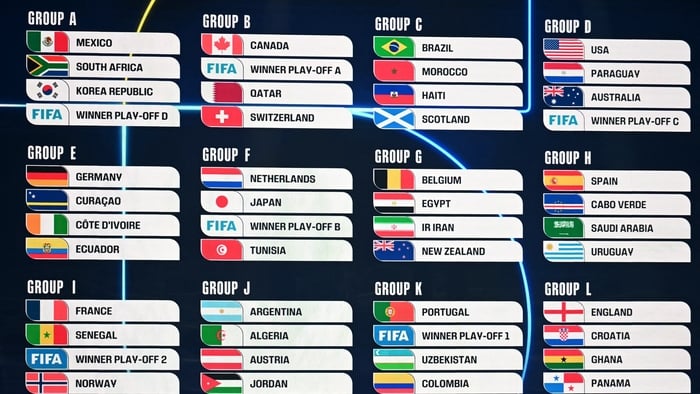
Group-Stage Favorites vs Knockout Favorites: Why They Are Often Different
One of the most common patterns in World Cup history is that teams who dominate the group stage do not always go on to win the tournament. Fans often ask: why do group-stage favorites and knockout-stage favorites differ so often?
The answer lies in football psychology, tactics, and tournament structure.
You might also like

Atlético Target Barco as Chelsea Competition Looms, but Major Obstacle Emerges
10:47 agoThe group stage is about accumulation.
- Points matter more than style
- Goal difference can decide qualification
- Risk is often managed carefully
Related Article

European Giants Circle Yan Diomande as AFCON Breakout Star Attracts January Interest
02:29 agoTeams that control matches and limit mistakes usually perform well here.
Why Strong Possession Teams Excel in Group StagesPossession-heavy teams thrive early.
- They dominate weaker opponents
- They limit defensive exposure
- They control match tempo
This explains why teams like Spain or Germany often top groups.
Group-Stage Football Has Lower Immediate PressureMistakes are not always fatal.
- Teams can recover after one poor result
- Rotation is possible
- Risk can be calculated
This allows structured teams to express themselves.
Knockout Matches Change EverythingOnce knockout rounds begin:
- One mistake can eliminate a team
- Margins become extremely thin
- Pressure increases instantly
Different qualities are now rewarded.
Why Knockout Favorites Are Often More DirectEfficiency becomes critical.
- Few chances are created
- Defensive compactness increases
- Clinical finishing is decisive
This is why teams like Argentina, France, or Brazil often grow stronger in knockout rounds.
Why Defensive Stability Matters More in KnockoutsDefence wins tournaments.
- Compact shape reduces chaos
- Experienced centre-backs control space
- Goalkeepers become decisive
Teams that concede less survive longer.
Why Tactical Flexibility Is EssentialKnockout football demands adaptation.
- Opponents are studied in detail
- Mid-game tactical changes are required
- Plan B becomes crucial
Rigid systems struggle under pressure.
Why Group-Stage Dominance Can Be MisleadingHigh-scoring group performances can deceive.
- Weak opponents inflate statistics
- Open matches exaggerate attacking quality
- Defensive flaws may be hidden
Knockout opponents expose weaknesses.
Why Mental Strength Separates Knockout WinnersPsychology becomes decisive.
- Handling expectation
- Managing late-game pressure
- Staying composed in penalties
Teams with calm leadership outperform emotionally reactive sides.
Why Penalty Shootouts Favour likely TeamsPenalties are not random.
- Experience reduces anxiety
- Goalkeepers with shootout history gain advantage
- Preparation improves success rate
This often separates contenders from favourites.
Why Rotation Helps in Groups but Hurts in KnockoutsSquad rotation has limits.
- Group stages allow experimentation
- Knockouts require settled lineups
- Understanding between players becomes critical
Continuity beats freshness in elimination matches.
Real Examples From Recent World CupsHistory supports this pattern.
- Germany (2014) grew stronger in knockout rounds
- Argentina (2022) peaked after early struggles
- France consistently manage knockout pressure well
Momentum is built, not displayed early.
How This Helps Fans Read World Cup 2026 MatchesUnderstanding the difference helps fans:
- Avoid overrating group-stage scorelines
- Identify true tournament contenders
- Anticipate knockout adaptability
Context matters more than early dominance.
Final ThoughtsGroup-stage favorites and knockout favorites are often different because tournaments reward different qualities at different stages. Control and consistency win groups, while efficiency, mentality, and adaptability win titles.
In World Cups, the best team is often the one that peaks last, not first.






No comments yet. Be the first to share your thoughts!